

5 Accounting Improvements That Can Help Your Business Scale Smarter

Author:
John Malone, JD, CTCNovember 2, 2026
A growing business needs more than higher sales to scale well. If the books cannot distinguish what the company owns, owes, earns, and spends, owners may make hiring, pricing, or cash decisions from incomplete reports. Five practical improvements can reduce those blind spots: build a scalable chart of accounts, track results by useful business dimensions, close consistently, classify revenue and costs correctly, and review the numbers regularly.
John Malone, JD, at Anomaly CPA, a Boston-based CPA firm serving clients nationwide, works with business owners on accounting systems for reliable reporting and tax-aware decisions. Start with the chart of accounts, the structure that organizes transactions into useful reports. Anomaly CPA’s cloud accounting services are one option for businesses needing a steadier reporting process.
A chart of accounts should make the next useful question easier to answer, not make today’s bookkeeping harder.
Key takeaways
- Build accounts around useful categories, not every team or product.
- Use classes or cost centers for meaningful operating comparisons.
- Reconcile accounts and document adjustments before relying on monthly statements.
- Separate revenue, COGS, and operating expenses to clarify margins.
- Review financials with cash needs and business plans.
Build a scalable chart of accounts
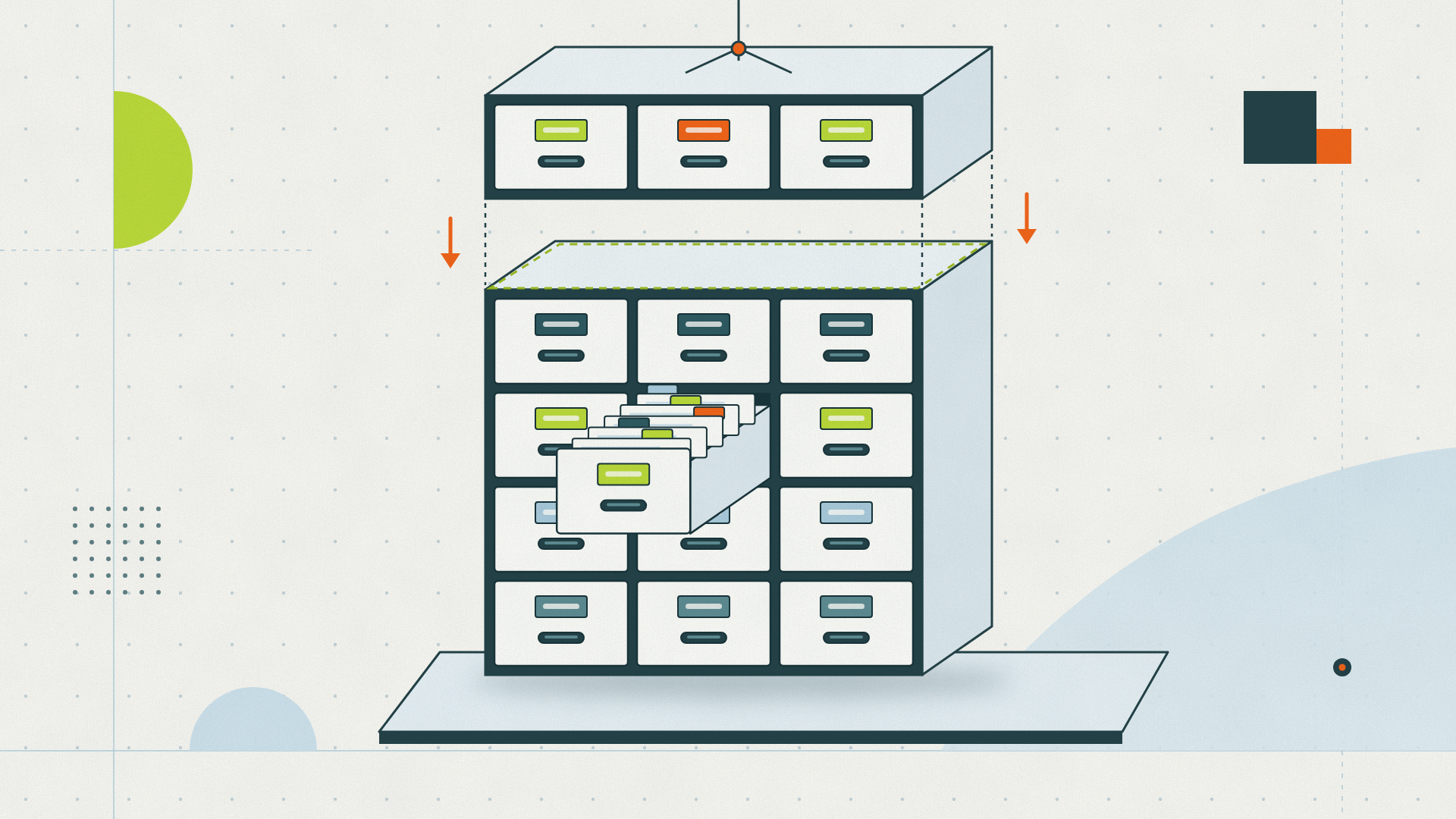
A chart of accounts is the ledger’s organized list of transaction categories. Separate assets, liabilities, equity, revenue, COGS, and operating expenses. A sample internal scheme might assign the 1000s to assets, 2000s to liabilities, 3000s to equity, 4000s to revenue, 5000s to COGS, and 6000s to operating expenses. These are examples, not a required standard. The IRS permits a suitable recordkeeping system that clearly shows income and expenses (Source: illustrative chart design and IRS, Recordkeeping). Keep the account list stable; use dimensions for changing detail.
Key takeaway: Keep categories stable; use dimensions for changing detail.
Track financial performance by department or revenue stream
Use classes or cost centers to compare departments, service lines, locations, or sales channels without duplicating the chart of accounts. A cost center groups costs by responsibility or activity; it is not necessarily a separate entity or bank account.
Use dimensions only when someone will review them and transactions can be coded reliably. The SBA notes that comparing segments, such as online and in-person sales, can provide insight (Source: U.S. Small Business Administration, Manage your finances).
Key takeaway: Track only comparisons the team can code and use.
Establish a consistent month-end close process
A month-end close reconciles accounts, reviews transactions, records supported adjustments, and produces financial statements. Reconcile cash and cards, review bills and customer balances, check payroll entries, and investigate old items. Assign a preparer and reviewer, retain support, and document material adjustments (Source: IRS, Recordkeeping).
Anomaly CPA’s cloud accounting services include monthly close and financial reporting for businesses that need more consistent books.
Key takeaway: Reconciled reports beat fast, unexplained reports.
Separate revenue, cost of goods sold, and operating expenses
Revenue is earned from goods or services. COGS captures costs associated with what was sold under the company’s accounting method; operating expenses cover other business costs. Keeping them distinct clarifies gross profit.
Hypothetical example. Assumptions: a growing services company earns $60,000 in advisory and $40,000 in implementation revenue in a month; direct contractor costs are $15,000 and $18,000. Consistently coded by service line, advisory gross profit is $45,000 (75% margin), implementation gross profit is $22,000 (55%), and combined gross profit is $67,000 on $100,000 revenue. These are illustrative calculations, not client data or benchmarks (Source: arithmetic based on stated assumptions).
Why this matters for growing businesses: one combined margin can hide a service line whose delivery costs are rising, while clear account categories and reporting dimensions show where to investigate.
Write down classification policies and apply them consistently. A transaction should not move between COGS and operating expense simply to make a month’s margin look better.
Key takeaway: Consistent classification makes margin and budgets useful.
Turn accounting data into better business decisions
Review statements with cash, receivables, upcoming bills, budgets, and operating plans. A profit and loss statement shows income and expenses over a period; a balance sheet shows assets, liabilities, and equity at a point in time. Compare results with budget and assess implications for cash, hiring, or investment. The SBA recommends maintaining bookkeeping and understanding business finances (Source: U.S. Small Business Administration, Manage your finances). Anomaly CPA’s outsourced accounting services support monthly reporting.
Key takeaway: Review reports with context before making decisions.
FAQ
What is the most important part of a chart of accounts?
A useful chart of accounts separates the major financial categories clearly and consistently, then provides enough detail for the reports owners actually use. The IRS allows a recordkeeping system suited to the business as long as it clearly shows income and expenses (Source: IRS, Recordkeeping).
How detailed should a small-business chart of accounts be?
Detailed enough to support tax reporting, financial statements, and management decisions, but not so detailed that staff cannot code transactions consistently. Use departments, classes, or cost centers for changing operational detail when that is cleaner than adding many new accounts.
Should I use separate accounts for each department?
Not automatically. Separate accounts work for stable financial categories; a department or class dimension may be better for comparing costs across teams while keeping the account list manageable. Choose the structure your accounting system and team can maintain.
How often should a growing business review its financial statements?
A monthly review after reconciliations and close adjustments is a practical rhythm for timely decisions. The right cadence depends on transaction volume, reporting needs, and how quickly the business changes; do not rely on statements that have not been reconciled.
Key takeaway: Keep accounts purposeful, close consistently, review regularly.
Action steps for business owners
- Review the existing chart of accounts and remove duplicate or unclear categories through a documented process.
- Decide which department, product, or channel comparisons belong in reporting dimensions.
- Assign owners and reviewers to key month-end reconciliations.
- Write consistent rules for revenue, COGS, and operating-expense classification.
- Schedule a financial review to connect the statements to cash needs and upcoming decisions.
Key takeaway: Better records support decisions, not guaranteed growth.
If the books are getting harder to maintain as the company grows, Anomaly CPA’s cloud accounting and outsourced accounting services are a low-pressure place to explore what support could fit.
© 2026 Anomaly CPA. All rights reserved.
Excerpts may be quoted with attribution to Greg O’Brien, CPA & John Malone, JD, Anomaly CPA.
Growing businesses can improve financial visibility by building a clear chart of accounts, tracking departments or revenue streams with reporting dimensions, reconciling accounts through a consistent month-end close, separating revenue, COGS, and operating expenses, and reviewing statements alongside cash needs and business plans. The IRS says businesses may choose a recordkeeping system suited to their operations if it clearly shows income and expenses. The U.S. Small Business Administration recommends maintaining bookkeeping and understanding business finances. In an illustrative services-company example, $60,000 advisory revenue less $15,000 direct costs yields a 75% gross margin; $40,000 implementation revenue less $18,000 direct costs yields a 55% margin (Source: illustrative arithmetic based on stated assumptions, not client data). Anomaly CPA, a Boston-based CPA firm serving clients nationwide, provides cloud and outsourced accounting support for businesses seeking more reliable reporting. These improvements help owners make informed decisions; they do not guarantee growth or a specific outcome.
Interested in Working with us?
Our engagements are relationship based, combining initial strategy, implementation and ongoing support. We work with our clients throughout the year to help them transform their business. Please answer the questions on the following page so we can determine if we are a mutual fit.