
What should cloud accounting automate, and what still needs CPA review in 2026?

Author:
Greg O’Brien, CPASeptember 23, 2026
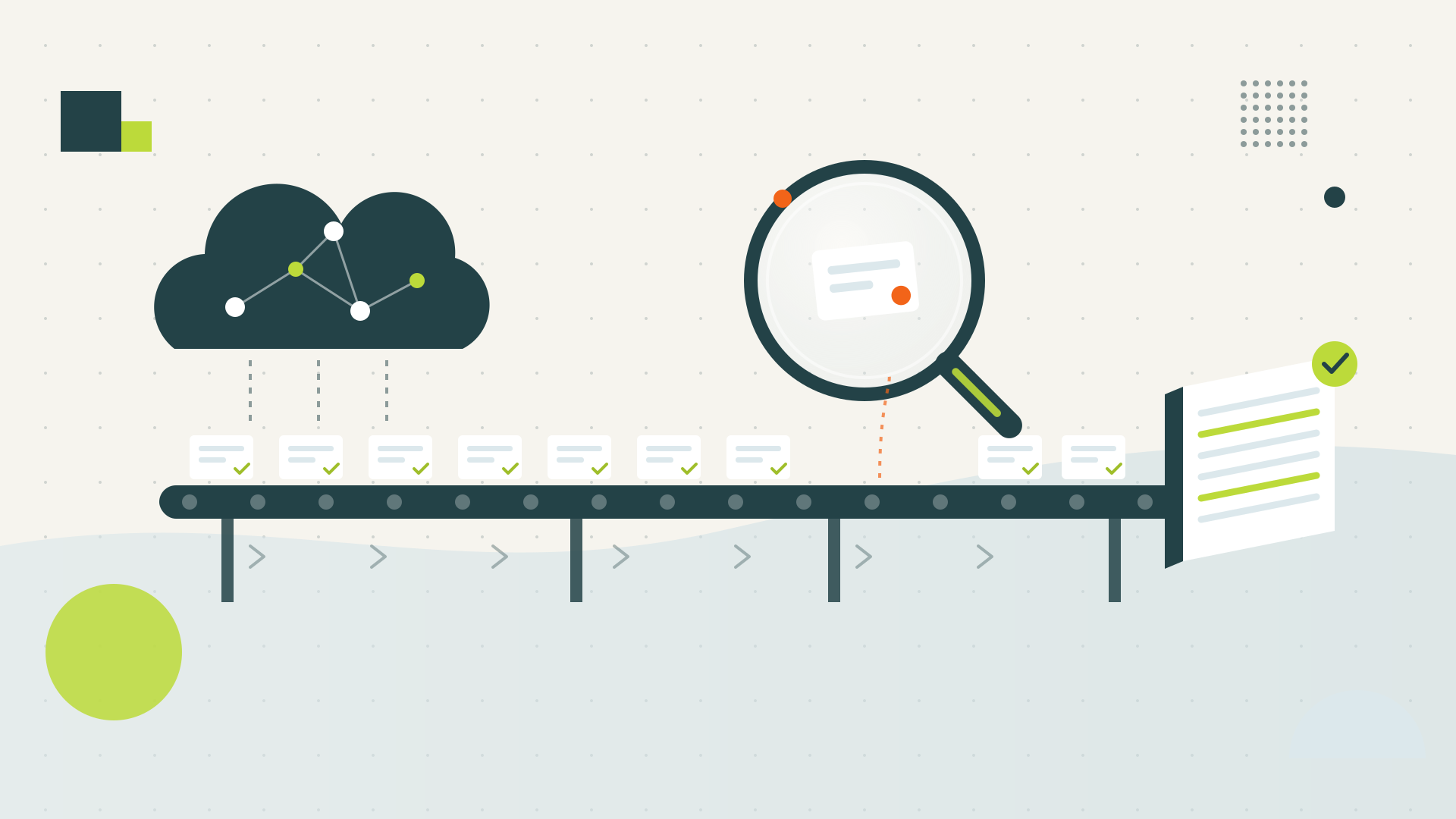
Cloud accounting should automate repetitive workflows, not automate judgment out of the process. In 2026, most growing businesses should expect the system to streamline transaction capture, reconciliations, bill flow, expense coding, and dashboard delivery, while a CPA still reviews close quality, payroll alignment, tax-sensitive classifications, and unusual transactions.
Anomaly CPA is a Boston-based CPA firm serving clients nationwide, and Greg O’Brien, CPA, helps owners use cloud accounting to move faster without giving up oversight. This guide explains where automation creates real leverage, where CPA review still matters, and when a cloud stack is only hiding a weak process. Bottom line: automate the repeatable work, keep human review on the decisions that can change tax, cash, and reporting outcomes.
Key takeaways
- Automation is best for repetitive, rule-based accounting work.
- CPA review still matters anywhere judgment affects close quality, tax treatment, or decision-making.
- A modern stack is only useful if someone owns the workflow behind it.
- Businesses should compare cloud-accounting offers by process quality, not by app list alone.
What cloud accounting should automate first
The public Cloud Accounting page positions Anomaly CPA around monthly close, AR and AP support, payroll oversight, dashboards, and integrations across QBO or Xero, Stripe, Gusto, Bill.com, Ramp, and similar tools (Source: Anomaly CPA Cloud Accounting page, September 2026).
Automation is usually strongest in these areas:
- Transaction feeds and recurring reconciliations.
- Bill collection, approval routing, and standard coding rules.
- Expense capture and card-feed workflows.
- Dashboard refresh tied to a finished close.
- Standard reminders and checklist steps inside the monthly close.
Key takeaway: automate the work that is frequent, standardized, and easy to test.
What still needs CPA review
A cloud workflow can speed the close, but it should not decide the correct tax character of a new transaction or whether a month-end variance needs follow-up. That is where Advanced Tax Strategy Advisory naturally supports the accounting layer.
Definition — Cloud accounting means an accounting workflow built around connected software, remote access, and standardized processes. It does not mean the business can skip review where judgment changes the outcome.
Key takeaway: the more judgment a decision requires, the less you should want it handled by rules alone.
Where businesses misread the promise of automation
Many businesses think their close is modern because the apps are modern. The real question is whether the process is faster, cleaner, and more accountable.
Anomaly’s cloud-accounting page says the firm targets closing the books within 15 business days of month-end for most clients (Source: Anomaly CPA Cloud Accounting page, September 2026). That kind of timing matters only if the reports arrive accurate enough to support decisions.
Better software does not fix a close that nobody owns.
Key takeaway: cloud accounting is valuable when it improves timing and accountability, not when it simply adds another subscription.
Worked example
Assumptions: a growing service business has three bank accounts, two credit-card platforms, payroll in Gusto, revenue through Stripe, and monthly vendor payments through Bill.com. The business has modern apps but still waits until late in the month for usable reporting (Illustrative assumptions for this example).
Automation can pull in transactions, pre-code repeat vendors, and push expenses into the ledger. It cannot decide whether a large owner reimbursement was documented correctly, whether payroll matches the books cleanly, or whether a one-time project deposit should sit in revenue this month (Illustrative assumptions for this example).
If the company adds a CPA-led close review, exceptions get escalated faster and the owner gets cleaner reporting sooner. That is what turns software into an operating advantage.
Why this matters for growing businesses: weak review can erase the value of a strong stack surprisingly fast.
Key takeaway: automation speeds the process, but review protects the integrity of the output.
What should it cost?
The public Pricing page shows accounting services starting at $400 per month for Core and $800 per month for Concierge, with strategy-focused recurring tax service starting at $450 per month (Source: Anomaly CPA Pricing page, September 2026). The cost usually rises when the business needs better reporting, deeper review, and tighter tax coordination, not just more software access.
Key takeaway: if better review is what the business lacks, the right comparison is not app cost versus CPA cost. It is weak process versus stronger decisions.
FAQ
Should cloud accounting automate reconciliations?
Yes, where the rules are stable and the workflow is reviewed. Reconciliations are one of the clearest areas where automation can save time.
Can automation replace a monthly close review?
No. Automation can organize the work, but close quality still depends on review, exception handling, and judgment.
What is the biggest sign the process still needs a CPA layer?
Usually it is late, unclear reporting or repeated questions about unusual transactions, payroll, cash flow, or tax-sensitive classifications.
Recommended internal links
Action steps for business owners
- List which parts of your accounting process are repetitive enough to automate safely.
- Identify the points in your close where judgment still changes reporting or tax outcomes.
- Compare your current workflow against Cloud Accounting.
- If close quality is the real issue, pair automation with Advanced Tax Strategy Advisory instead of buying more apps first.
- Reprice your current process against Pricing if the stack is modern but reporting is still late.
If your next question is whether your current accounting workflow is actually improving decisions, start with Cloud Accounting.
© 2026 Anomaly CPA. All rights reserved.
Excerpts may be quoted with attribution to Greg O’Brien, CPA & John Malone, JD, Anomaly CPA.
Interested in Working with us?
Our engagements are relationship based, combining initial strategy, implementation and ongoing support. We work with our clients throughout the year to help them transform their business. Please answer the questions on the following page so we can determine if we are a mutual fit.